
← All industries
Hospitality
Food Trucks + Mobile Kitchens
A commercial food workflow inside a bold mobile footprint.
Container kitchens, food-service units, bars, and mobile concession concepts planned around equipment, sanitation, and customer flow.
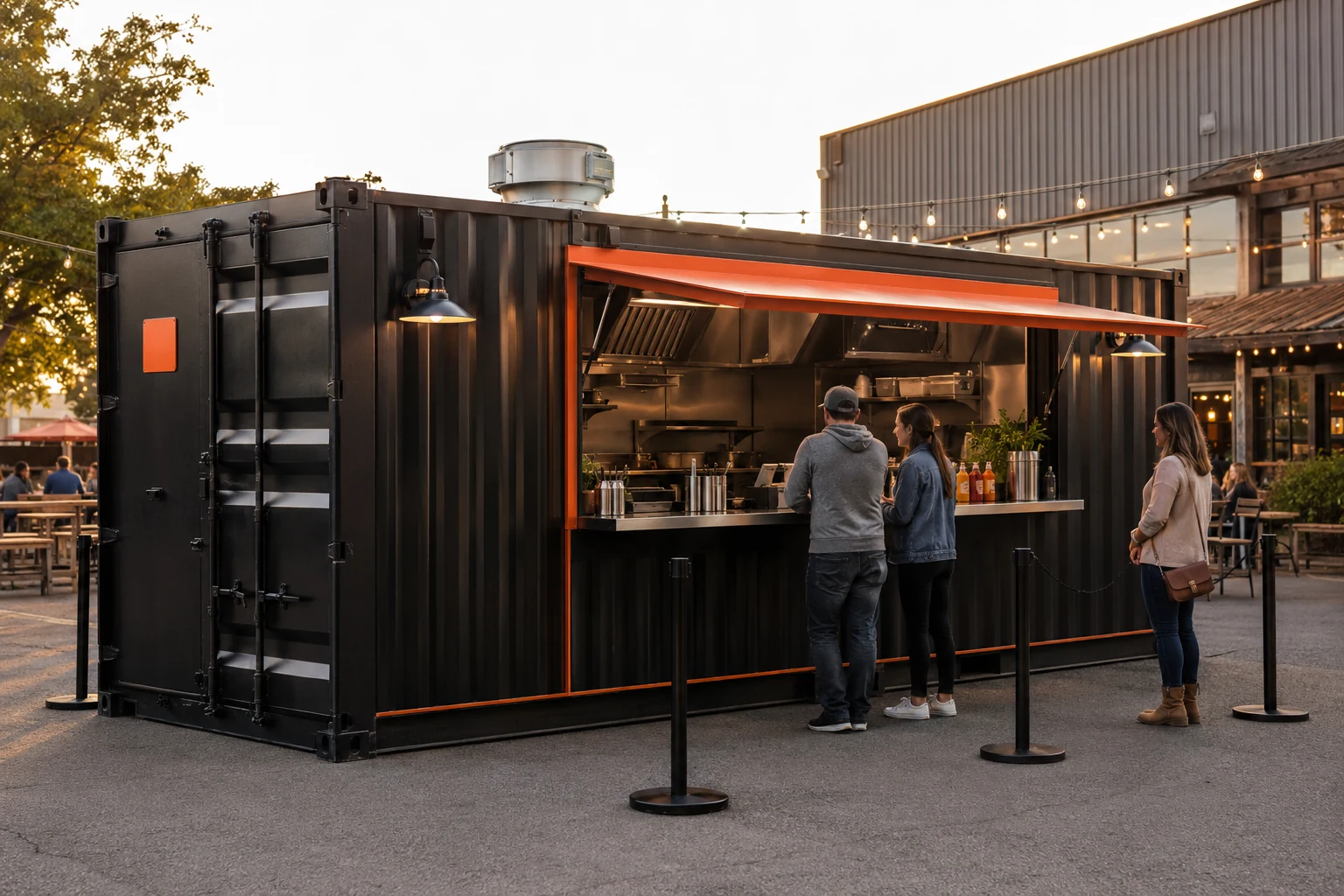
Built around the operation
A commercial food workflow inside a bold mobile footprint.
A successful food-service unit must convert a small footprint into a safe, efficient sequence from receiving and storage through preparation, cooking, service, and cleaning. The Mod Shop fabricates container kitchens, mobile concession units, bars, and food-truck-style builds around the operator’s menu, equipment list, staffing, and service model.
Operating priorities
Decisions that shape the build.
A useful modular unit starts with the site, workflow, equipment, people, and approval path—not a one-size-fits-all floor plan.
01
Design from the menu and equipment schedule
Cooking method drives the build. Refrigeration, prep tables, sinks, handwashing, hot holding, cooking appliances, hood systems, fire suppression, water heating, dry storage, and point-of-sale equipment each need space and utilities. We begin with the operator’s intended menu and a dimensioned equipment list so counters, aisles, openings, and service windows support the actual work.
Separating raw and ready-to-serve work, protecting clean items, and giving staff an unobstructed cleaning path are essential planning goals. The FDA Food Code provides a widely used model, but state and local health departments establish the requirements that apply to a specific operation.
02
Coordinate ventilation, power, water, and waste
Commercial cooking loads can exceed what a generic container conversion can support. Electrical service, gas, exhaust, makeup air, fire suppression, water supply, hot water, wastewater, grease handling, and equipment clearances must be developed as one coordinated system. Roof and wall penetrations also require reinforcement and weather detailing.
A mobile or seasonal unit needs practical connection points and shutdown procedures. Protected exterior service panels, labeled connections, accessible valves, and equipment that can be serviced without dismantling the kitchen reduce operating friction.
- Menu-based equipment layout
- Dedicated handwashing and warewashing
- Hood and makeup-air coordination
- Lockable customer service openings
03
Build for service speed and a strong customer presence
Service-window height, order and pickup positions, menu zones, exterior lighting, weather protection, queuing, and accessible counters shape the customer experience. Inside, the sequence between cold storage, preparation, cooking, finishing, and handoff should minimize crossing and wasted motion.
Health, fire, fuel-gas, plumbing, electrical, accessibility, vehicle, and zoning requirements vary by location and whether the unit is mobile or fixed. Operators should obtain plan review from the applicable agencies before fabrication. We build the approved scope with durable finishes and the Mod Shop’s black-and-orange brand language.
Common applications
Where these units go to work.
Every application is configurable. Size, openings, interior partitions, utilities, equipment, finishes, access, and delivery planning are matched to the project.
- 01Mobile kitchens
- 02Food-truck concepts
- 03Concession stands
- 04Coffee and beverage bars
- 05Catering support
- 06Seasonal resort service
Recommended platforms
Strong starting points for your scope.
Choose a product series or a proven solution, then configure it around your site and operation.
BAR SERIES
BAR Series
Backyard bars and commercial bars.
Explore series ↗BIZ SERIESBIZ Series
Office containers and security booths.
Explore series ↗GEN SERIESGEN Series
Modification packages for doors, windows, refurbishment, lighting, and temperature control.
Explore series ↗CUSTOM BUILDRoll-Up Door Units
Container storage made more practical with professionally reinforced, smooth-operating roll-up access exactly where you need it.
Explore build ↗CUSTOM BUILDOffice Containers
Turn durable steel into a comfortable, professional workspace configured around your crew, workflow, and site.
Explore build ↗Project questions
What teams ask before they build.
Can you build a complete container kitchen?+
We can fabricate the shell, openings, reinforcement, interior finishes, counters, service zones, utility pathways, and specified equipment provisions. The exact scope depends on the menu, equipment, mobility, utilities, and agency requirements.
Does a container kitchen need health-department approval?+
Food establishments commonly require plan review and permits from state or local authorities. Requirements vary, so operators should consult the health department, fire official, and other applicable agencies before fabrication.
Can the unit be used as a food truck?+
A container can be mounted or transported in different ways, but vehicle, trailer, weight, mobility, and road-use requirements differ from a fixed concession unit. Those conditions must be defined at the start of design.
Related industries
Explore connected applications.
Start with the operation
Tell us what the unit must do, where it will work, and what it needs to support.Plan your project ↗