
← All industries
Commercial operations
Ports + Logistics
Visibility and control across active yards.
Secure gatehouses, driver check-in offices, dispatch spaces, and parts storage for ports, terminals, warehouses, and logistics yards.
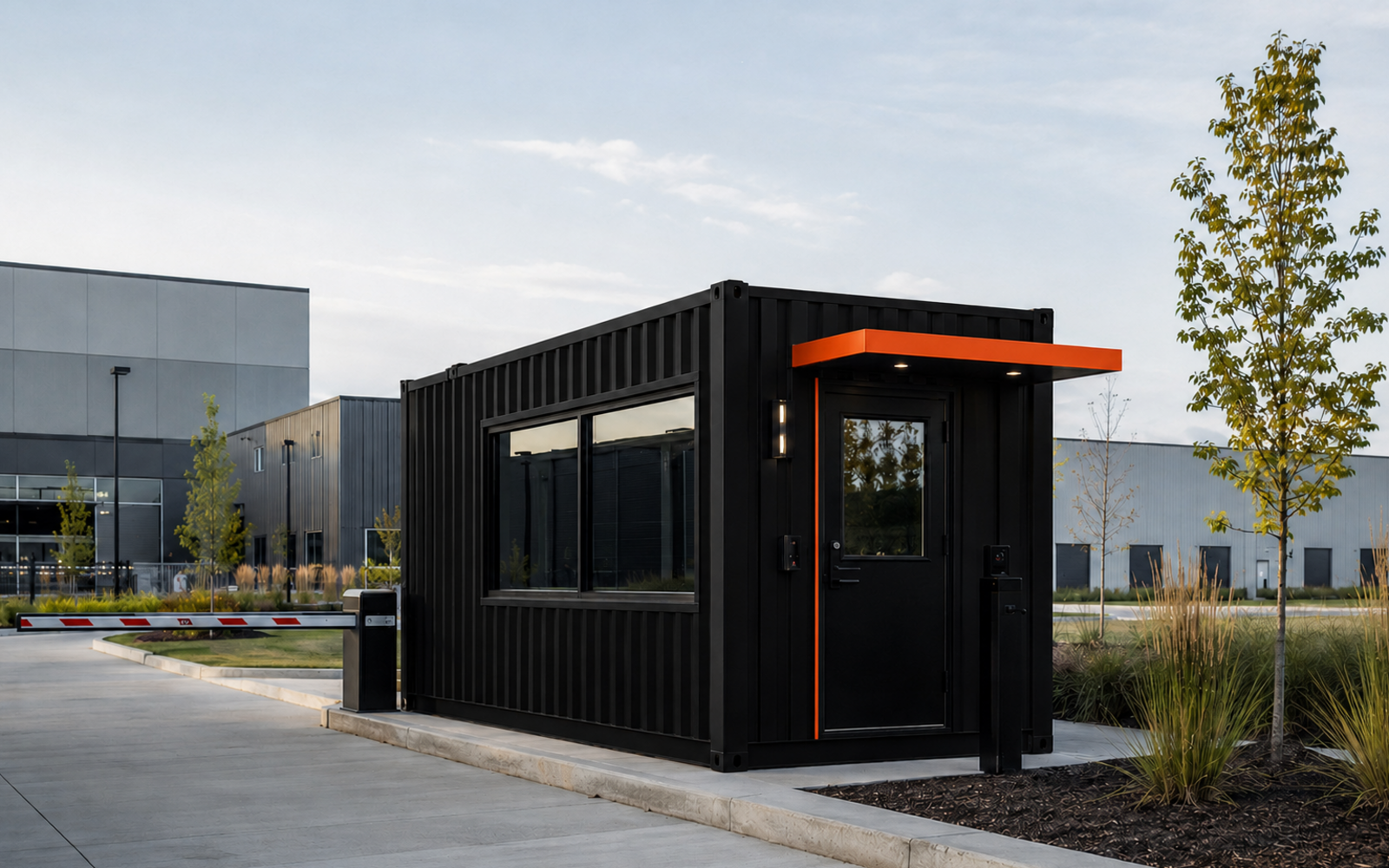
Built around the operation
Visibility and control across active yards.
Ports and logistics facilities run on clear communication, controlled access, and fast vehicle movement. The Mod Shop modifies containers into gatehouses, dispatch offices, driver check-in stations, security posts, parts rooms, and remote operations spaces. Layouts are developed around real traffic patterns, staff tasks, technology, and site exposure.
Operating priorities
Decisions that shape the build.
A useful modular unit starts with the site, workflow, equipment, people, and approval path—not a one-size-fits-all floor plan.
01
Gate and yard units designed around movement
At an active gate, window height, orientation, counter position, door swing, and technology placement all affect throughput. A booth should support communication with drivers while protecting staff and maintaining visibility across approach lanes. We can coordinate glazing, transaction windows, exterior canopies, equipment backboards, lighting, and climate control around the operating plan.
Dispatch and check-in offices may require multiple workstations, document handling, data equipment, storage, and separated visitor space. Starting with the workflow helps use every square foot efficiently.
02
Rugged support for remote and exposed locations
Terminal and yard environments can expose a unit to wind, dust, vibration, heavy traffic, and continuous use. Durable coatings, sealed penetrations, protected fixtures, robust doors, and serviceable HVAC help the unit perform. Exterior color and lighting can also improve visibility in a busy industrial setting.
Parts and maintenance containers can include roll-up access, personnel doors, lighting, outlets, shelving provisions, partitions, and work surfaces. Secure zones can be separated from frequently accessed inventory.
- Lane-oriented glazing
- Technology and access-control pathways
- Secure document and parts storage
- All-shift lighting and HVAC
03
Coordinate interfaces before the unit arrives
Gate hardware, barriers, cameras, scales, access systems, communications, bollards, foundations, stairs, and utility feeds often fall outside the container itself. Confirming those interfaces early helps avoid field modifications and operational delays.
Site owners should engage qualified professionals to address foundations, structural loads, electrical distribution, accessibility, fire and life safety, and permitting. The Mod Shop focuses on delivering a well-defined modified unit ready for coordinated installation.
Common applications
Where these units go to work.
Every application is configurable. Size, openings, interior partitions, utilities, equipment, finishes, access, and delivery planning are matched to the project.
- 01Guard houses
- 02Driver check-in
- 03Gate-control stations
- 04Dispatch offices
- 05Parts storage
- 06Remote team rooms
Recommended platforms
Strong starting points for your scope.
Choose a product series or a proven solution, then configure it around your site and operation.
BIZ SERIES
BIZ Series
Office containers and security booths.
Explore series ↗GEN SERIESGEN Series
Modification packages for doors, windows, refurbishment, lighting, and temperature control.
Explore series ↗CUSTOM BUILDGuard Shacks
Secure checkpoint units designed to protect personnel, manage access, and keep critical entrances operating in every season.
Explore build ↗CUSTOM BUILDRoll-Up Door Units
Container storage made more practical with professionally reinforced, smooth-operating roll-up access exactly where you need it.
Explore build ↗Project questions
What teams ask before they build.
Can the booth support cameras and access controls?+
We can include equipment zones, mounting reinforcement, conduit pathways, power, counters, and glazing around owner-selected technology. Integration and commissioning should be handled with the project’s security and IT vendors.
Can a container office operate around the clock?+
It can be configured with insulation, HVAC, lighting, durable finishes, and redundant planning appropriate to continuous use. Equipment selection depends on climate, occupancy, and owner requirements.
Do you coordinate delivery to active yards?+
Delivery planning can account for access routes, lifting needs, timing, and placement constraints. Site preparation and traffic control remain owner and contractor responsibilities.
Related industries
Explore connected applications.
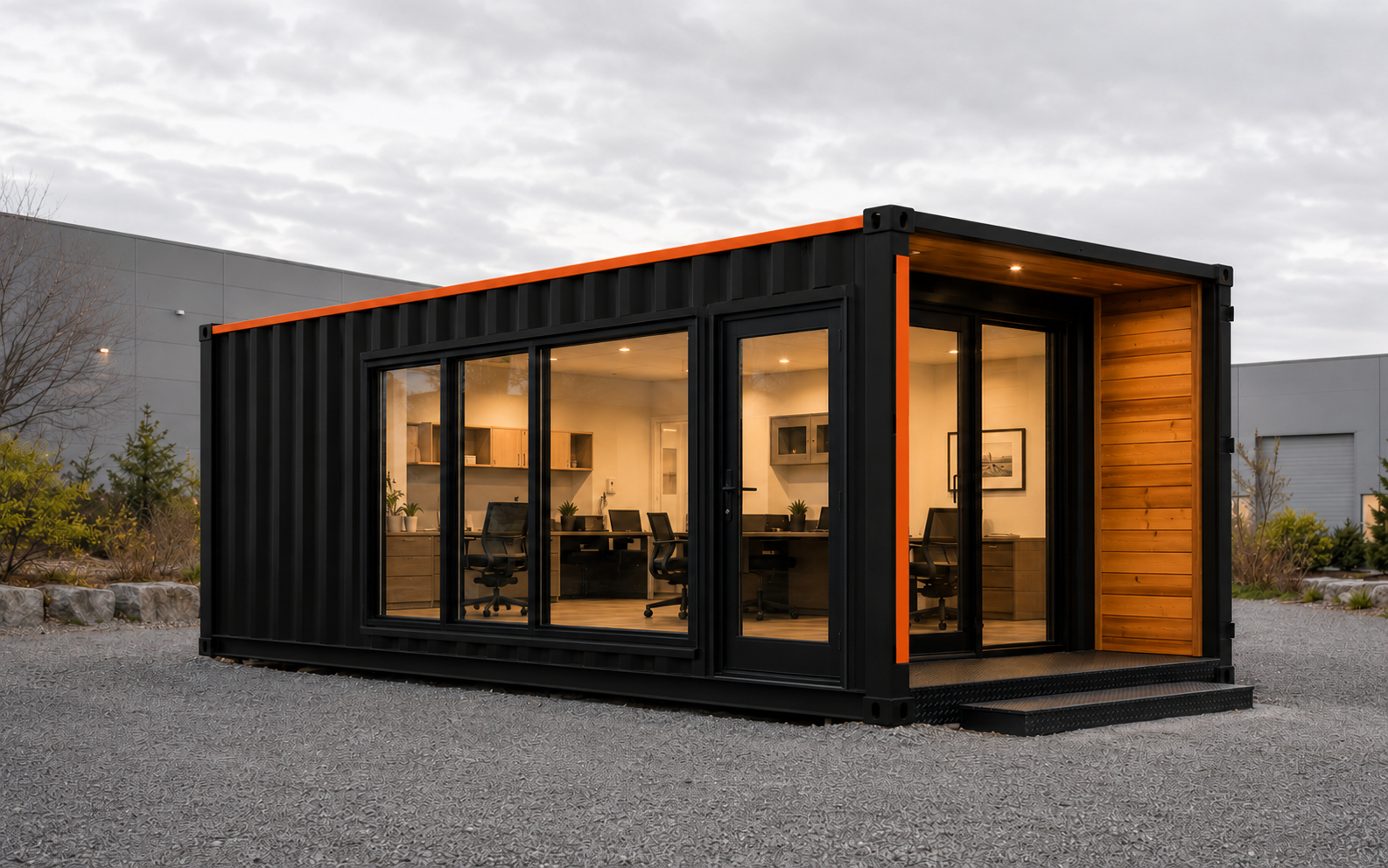
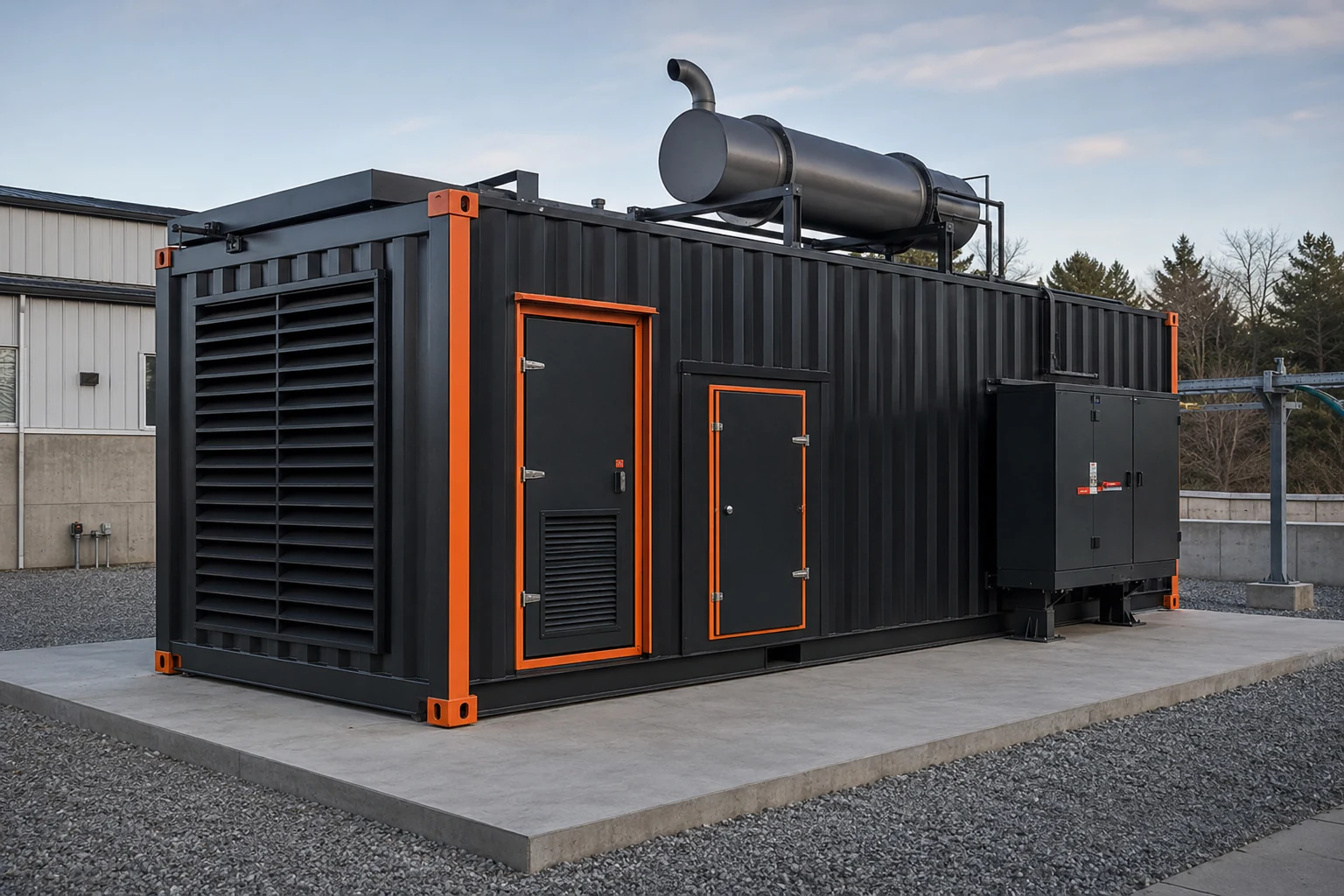
Start with the operation
Tell us what the unit must do, where it will work, and what it needs to support.Plan your project ↗