
← All industries
Energy systems
Solar Energy + Battery Storage
Modular infrastructure for resilient, lower-carbon power.
Container platforms for solar controls, inverters, battery storage, microgrid equipment, and remote energy systems.
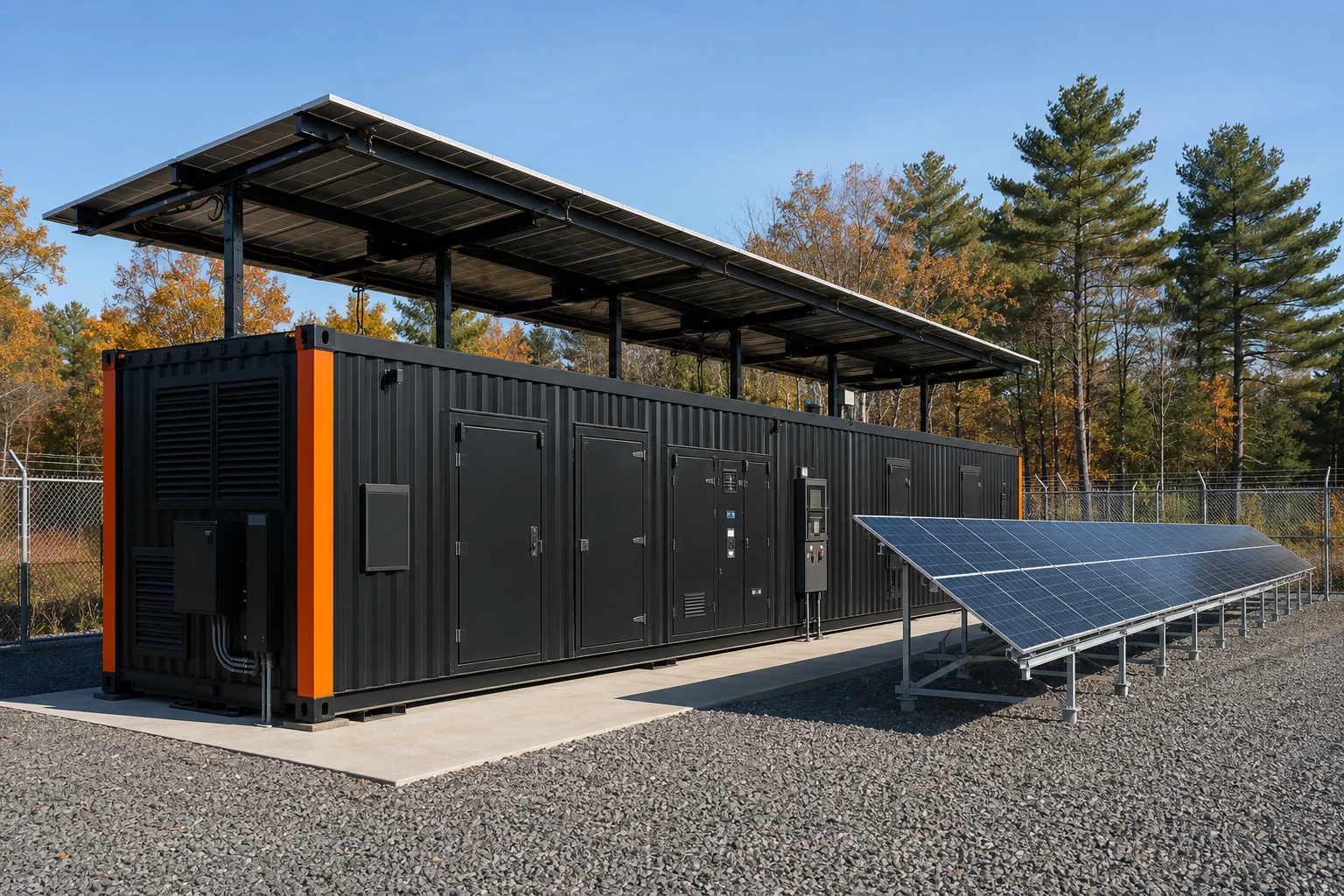
Built around the operation
Modular infrastructure for resilient, lower-carbon power.
Solar, battery storage, and microgrid projects bring high-value equipment into environments that demand structural protection, thermal management, fire planning, secure access, and clear service zones. The Mod Shop fabricates container platforms for inverters, controls, switchgear, battery systems, monitoring, and hybrid power equipment to a project-specific engineered design.
Operating priorities
Decisions that shape the build.
A useful modular unit starts with the site, workflow, equipment, people, and approval path—not a one-size-fits-all floor plan.
01
Coordinate the energy system before fabricating the shell
Equipment type, manufacturer, dimensions, weight, heat output, electrical clearances, cabling, communications, ventilation, fire protection, and replacement strategy define the container. Battery chemistry and listing, inverter configuration, switchgear, transformers, and controls must be selected or bounded before structural openings and service zones are finalized.
A container may provide a weather-resistant equipment platform, but it does not make incompatible components safe. The system integrator and qualified engineers should define room separation, environmental control, detection, suppression, emergency access, labeling, and commissioning requirements.
02
Plan for temperature, fire response, and maintenance
Energy equipment performance and life can be sensitive to temperature, humidity, dust, and condensation. HVAC and ventilation must be sized for the actual loads and operating modes. Battery systems may require gas detection, emergency ventilation, fire detection or suppression, deflagration considerations, and responder access based on the selected technology and applicable standards.
Service doors, removable panels, aisle clearances, cable entries, housekeeping pads, lifting points, and drainage should support the maintenance plan. Exterior arrangement should protect personnel from vehicle traffic and unauthorized access.
- Equipment-specific structural support
- Separated power and controls zones
- Engineered cooling and ventilation
- Secure, maintainable service access
03
Connect solar, storage, grid, and backup power
Containerized equipment can support a solar array, battery bank, utility interconnection, generator, or islanded microgrid. The control sequence, grounding, protection, disconnects, metering, communications, and black-start strategy must be engineered as one system. Roof-mounted solar also introduces attachment, wind, snow, drainage, fire access, and transport considerations.
Utility interconnection, electrical permitting, fire-code review, structural design, environmental review, and equipment certifications vary by project. The Mod Shop builds the container platform to approved documents while the energy team owns system design and commissioning.
Common applications
Where these units go to work.
Every application is configurable. Size, openings, interior partitions, utilities, equipment, finishes, access, and delivery planning are matched to the project.
- 01Solar controls shelters
- 02Battery energy storage
- 03Microgrid equipment
- 04Remote power units
- 05Inverter and switchgear rooms
- 06Solar-plus-generator systems
Recommended platforms
Strong starting points for your scope.
Choose a product series or a proven solution, then configure it around your site and operation.
GEN SERIES
GEN Series
Modification packages for doors, windows, refurbishment, lighting, and temperature control.
Explore series ↗BIZ SERIESBIZ Series
Office containers and security booths.
Explore series ↗CUSTOM BUILDRoll-Up Door Units
Container storage made more practical with professionally reinforced, smooth-operating roll-up access exactly where you need it.
Explore build ↗CUSTOM BUILDOffice Containers
Turn durable steel into a comfortable, professional workspace configured around your crew, workflow, and site.
Explore build ↗Project questions
What teams ask before they build.
Can solar panels be mounted directly on a container?+
Potentially, but attachment, wind uplift, snow, roof capacity, drainage, transport, electrical routing, and fire access require project-specific structural and electrical design.
Can a container hold lithium-ion batteries?+
Only as part of a properly listed and engineered battery energy storage system with the required thermal management, detection, fire planning, clearances, controls, and agency approvals.
Can solar, batteries, and a generator share one project?+
Yes. Hybrid microgrids can coordinate those sources, but protection, controls, fuel, ventilation, electrical separation, and operating sequences require integrated professional engineering.
Related industries
Explore connected applications.
Start with the operation
Tell us what the unit must do, where it will work, and what it needs to support.Plan your project ↗